
How To Do SEO?
SEO isn’t just about traffic — it’s about getting customers. To do SEO properly, start with a fast, crawlable website, target buyer-intent searches (not easy keywords), build pages that match real buying decisions, structure your site around how people search, add trust and proof, build authority, optimise for conversions, and track what actually drives revenue.
Keep reading for a step-by-step breakdown of how to do SEO that actually generates customers — not just traffic.
How To Do SEO (And Why Most Businesses Get It Completely Wrong)
You paid for a website.
It looks good. Clean design. Professional.
And yet…
Nothing happens.
No consistent enquiries.
No steady flow of customers.
Just the occasional lead — not even close to what you expected.
So you start searching:
“How to do SEO”
Trying to figure out what’s missing.
More traffic? More keywords? More content?
But here’s the problem…
You don’t just have a traffic problem.
You have an intent problem, a trust problem, and a conversion problem.
And most SEO advice is designed to fix the wrong one.

Here’s the real answer to “how to do SEO”
If you strip away all the noise, tools, and tactics…
SEO comes down to one thing:
SEO comes down to one thing: getting in front of people who are already looking to buy, and being the obvious choice when they find you.
That’s why most SEO never works — because it chases traffic, rankings, and vanity metrics instead of customers.
And once you understand that…
You start to see why most SEO never works.
What “How To Do SEO” Usually Teaches (And Why It Fails)

If you’ve looked into how to do SEO before, you’ve probably seen the same advice:
- Do keyword research
- Write blog content
- Build backlinks
- Optimise your site
Sounds logical.
It’s also why most SEO never makes a penny.
Because this approach focuses on:
- Traffic volume
- Keyword counts
- Reports and charts
Not:
- Leads
- Customers
- Revenue
You end up with:
- Visitors who never buy
- Rankings that don’t matter
- Reports that look good but do nothing
SEO didn’t fail you.
It was never designed to make you money.

Step 1: Fix Your Foundation (Before You Touch SEO)
Before we even get into how to do SEO properly…
There’s a step almost everyone skips.
And it quietly kills results before they even begin.
Most people start in the wrong place
They jump straight into:
- Keywords
- Content
- Backlinks
Without realising…
Their website is already working against them.
If your foundation is weak, your SEO will be too
- Slow hosting = slow site = worse rankings
- Cheap shared hosting = unstable performance
- Bloated frameworks = poor structure, hard to crawl
You can write the best content in the world…
But if your site loads slowly, breaks, or confuses search engines…
You’ve already lost.
What actually needs to happen first
Before anything else:
- Fast, reliable hosting (powerful VPS)
- Lightweight, SEO-friendly framework
- Clean, crawlable structure
- Lightning-fast load speeds
You can’t build high rankings on a slow, unstable foundation.
The mistake that kills most SEO
Starting SEO on bad hosting is like:
Pouring fuel into a leaking tank.
Everything after becomes weaker:
- Content underperforms
- Rankings underperform
- Conversions drop
This is where real SEO starts.
Not with keywords.
With infrastructure.
The Real Way To Do SEO (Not What You’ve Been Told)
Now we can answer the question properly.
If you want to know how to do SEO that actually works, you need to change the approach entirely.
Because traditional SEO focuses on:
- Tools
- Volume
- Copying competitors
Real SEO starts somewhere else.
The Shift: From Rankings → Revenue
Most SEO strategies are built like this:
- Find keywords
- Create content
- Try to rank
But this misses the only thing that matters:
Why is someone searching in the first place?

Step 2: Find Buyer Intent (Not Just Keywords)
Traditional SEO says:
“Find keywords with good volume”
Real SEO asks:
“What do people type when they’re close to or ready to buy?”
Examples:
- “Emergency plumber near me”
- “Roof repair cost”
- “SEO services Essex”
Why most SEO agencies stay average
Because ranking for buyer intent keywords is harder.
It requires:
- A planned strategy
- Precise execution
- Real competition
- Time, money and patience
So instead…
They go after:
- Easy keywords
- Low competition phrases
- Traffic that looks good in reports
The result?
You rank.
But nothing happens.
No calls.
No enquiries.
No sales.
Easy rankings don’t pay.
Buyer intent does.
Step 3: Map Searches To Decisions
Once you understand how to do SEO properly, you realise something:
Not all searches are equal.
There are stages:
- Research → learning
- Comparison → evaluating
- Decision → buying
Most businesses stay stuck in the research stage.
Where traffic is easy…
But money isn’t made.
What actually works
You need pages for:
- High‑intent searches (buyers ready to pull the trigger)
- Comparison queries (people weighing options)
- Decision‑stage keywords (pricing, “near me”, “quote”)
- Problem‑awareness questions (people Googling their pain)
- Trust‑building proof (case studies, process, guarantees)
Because that’s where customers come from.
Service pages, product pages, authority pages, and informational content — each built around one stage — so your SEO funnels visitors all the way to enquiry.
Step 4: Build Pages That Match Intent (Not Blogs)
Here’s where most SEO advice falls apart.
You’re told to:
- Write blogs
- Post regularly
- “Create content”
But content for the sake of content rarely converts.
What actually drives revenue
Instead:
- Service pages
- Location pages
- Problem-solution pages
- Comparison pages
- Pricing pages
- Conversion-focused Informational pages
- Case study pages
- Customer review/testimonial pages
- Conversion-focused FAQ pages
- Local landing pages
- Product or system-specific pages
Pages built for:
People who are ready to act.
Step 5: Structure Your Site Around How People Search
Most websites are built for:
- Design
- Aesthetics
- “Looking professional”
Not for:
- Search
- Structure
- Conversion
What a proper SEO structure looks like
- Services clearly defined
- Locations clearly targeted
- Pages mapped to intent
- Internal linking that supports rankings
Your website should mirror how your customers search.
Not how your designer thinks.
Step 6: Add Trust Before They Even Read
Here’s something most SEO guides never tell you.
Ranking is only half the battle.
When someone lands on your site…
You have between 1 and 5 seconds to earn their trust.
Because if they don’t…
They’ll leave before reading your copy.
You need ‘trust signals’ above the fold.
- Badges
- Reviews
- Case studies
- Proof
- Credentials
- Real results
Placed where they’re seen quickly
Not buried.
Step 7: Build Authority (Without Spam)
Backlinks still matter.
But not the way most agencies do them.
What doesn’t work
- Backlinks for the sake of ‘more backlinks’
- Spam directories
- Private Blog Networks
- Bulk link packages
Cheap links = weak rankings.
What actually works
- Relevant links
- Real websites
- Local authority
- Consistent growth
A good link‑building strategy will help your high‑intent pages rank higher — without putting your site at risk.

Step 8: Optimise for Conversions (Where SEO Actually Pays Off)
This is where most SEO falls apart.
Not because it can’t rank—
But because it stops at rankings.
Traffic doesn’t generate enquiries.
Conversions do.
What actually drives results
Once someone lands on your page, five things decide what happens next:
- Clear, persuasive copy
- A simple, structured layout
- Strong, visible calls to action
- Minimal friction (fast, obvious, easy to act)
- A logical flow from problem → solution → action
Every page has one job
Tell the visitor exactly what to do next.
Don’t make them think.
If it isn’t obvious within seconds…
You lose them.
The shift most people miss
SEO isn’t about getting clicks.
It’s about guiding someone from:
Search → solution → enquiry
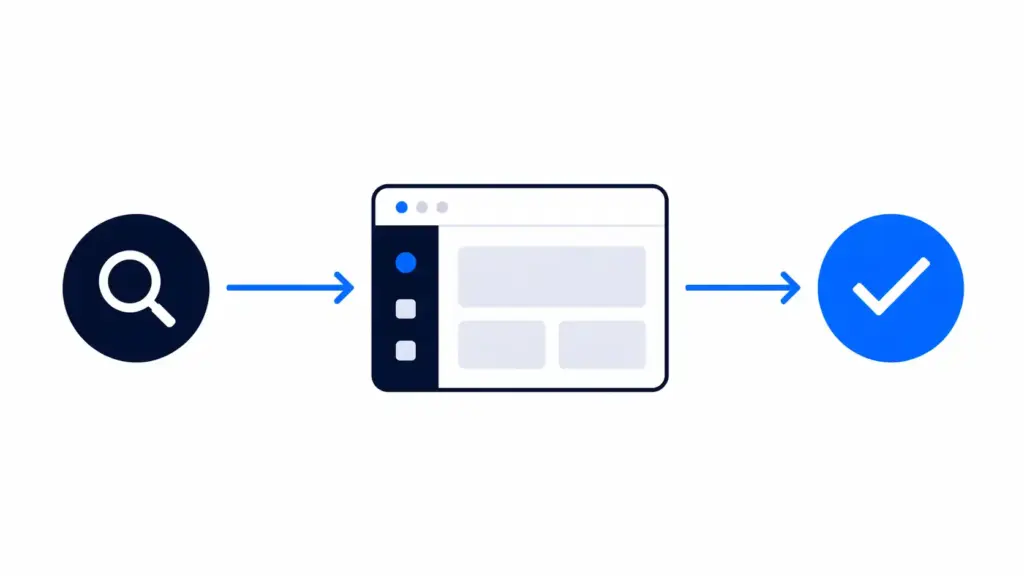
Break it down
- Ranking gets the click
- Intent keeps them on the page
- Conversion gets the customer
Miss the last step…
And everything before it is wasted.
What this looks like in practice
- A page that instantly confirms: you’re in the right place
- Trust signals exactly where doubt appears
- Content that solves the problem — not just describes the service
- Clear next steps (call, form, quote) without hesitation
Step 9: Track What Actually Drives Revenue (Not Vanity Metrics)
Most SEO agencies will show you:
- Keyword counts
- Impressions
- Traffic graphs
All designed to look impressive.
But none of it answers:
Is this making you money?
What actually needs tracking
If you want to understand how to do SEO properly, you need to track:
- Keyword positions in Google
(for buyer intent searches — not easy ones) - Traffic to those high-intent pages
- User behaviour in GA4
- Where they land
- What they consume
- What they click
- Where they drop off
- Conversions
- Calls
- Enquiries
- Actual leads
The difference is brutal
Most agencies track:
What’s easy to show
Not
What actually matters
What happens next
SEO isn’t:
- set and forget
It’s:
Research → plan → execute → track → optimise → scale
- Double down on what works
- Fix what doesn’t convert
- Refine continuously
The truth
If you’re not tracking buyer behaviour…
You’re guessing.
And guessing is why most SEO never improves.
Why Most SEO Agencies Fail (And Keep You Paying)
Most SEO agencies aren’t just underperforming…
They’re optimising for things that don’t make you money.
Because:
- Buyer intent is harder
- Real competition is tougher
- Results take actual strategy
So they default to:
- Easy rankings
- Padded reports
- Meaningless traffic
The outcome
You get activity.
Not results.
What Happens When SEO Is Done Properly
When you actually understand how to do SEO the right way…
Everything changes.
You stop chasing customers
And start getting found by them.
You build momentum
- More pages
- More authority
- More visibility
Everything compounds.
You generate more targeted high-intent traffic
You make more sales

The Final Answer: How To Do SEO Properly
If you came here looking for how to do SEO, here’s the truth most won’t tell you:
You can follow the standard advice:
- Chase keywords
- Publish content
- Build backlinks
- Watch reports
And you’ll probably get:
- Some rankings
- Some traffic
- Very little revenue
Because that version of SEO was never built to make you money.
Or…
You can do it differently.
- Fix the foundation first
- Target buyer intent, not traffic
- Build pages around real decisions
- Structure your site around how people actually search
- Add trust before they even think about leaving
- Build authority properly
- Optimise for conversions
- Track what leads to revenue — and scale it
This is where the split happens
Most businesses stay stuck here:
- Doing “SEO”
- Seeing activity
- Getting little return
A small number make the shift:
- From traffic… to customers
- From rankings… to revenue
- From guessing… to control
And this is the part that matters
You don’t need to learn more about how to do SEO
You need to decide:
Are you going to keep doing SEO the way everyone else does…
Or switch to SEO that actually makes money.